Toby Hodges takes a look at all the nominees and the winner of the performance yacht category in the European Yacht of the Year Awards
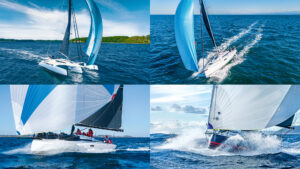
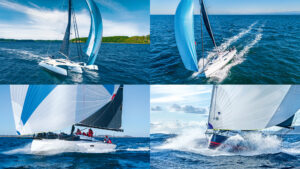
The European Yacht of the Year awards is the most thorough and impartial awards programme – the winners here are widely considered the best yachts of the year. As such the boats nominated by the jury in the best performance yacht category can be considered the best of the best and 2026’s shortlist saw a very impressive lineup indeed.
Some very different yet utterly brilliant designs recently launched in the performance sector – those with a need for speed (and the means) are living in fortunate times! This collection of go-faster yachts proved particularly difficult to agree categories for and whether to make them race-focussed or not.
The Pogo RC was unable to make our sea trials, and as that is an imperative part of the awards, it is excluded. The JPK and XR 41
are similar in that they’re true modern cruiser-racers, which have already proved what they were conceived to do in the best possible way.
Best performance multihull – 2026 Dragonfly 36
This is the jewel in the crown of this family yard’s three generations and six decades of building. Despite the complexities of physics involved in such a fast, folding trimaran, this was the boat that ventured out in a gale to prove its build quality. A feat of design and engineering that is without compare in the production yacht world, the Dragonfly offers a new level of stable speed sailing, all contained in 4.5 tonnes of pure, unadulterated fun.
What an impressive lineup. Some very different yet utterly brilliant designs recently launched in the performance sector – those with a need for speed (and the means) are living in fortunate times! This collection of go-faster yachts proved particularly difficult to agree categories for and whether to make them race-focussed or not.
The Pogo RC was unable to make our sea trials, and as that is an imperative part of the awards, it is excluded. The JPK and XR 41 are similar in that they’re true modern cruiser-racers, which have already proved what they were conceived to do in the best possible way.
Best performance monohull 2026 – Beneteau First 30
The First offers fast, easy, planing fun, pure and simple – and that’s not as easy to achieve as it sounds. But Beneteau and Seascape have managed it, providing genuine planing performance on a yacht that’s easy to cruise and all within their targeted €100,000 price. Sadly, very few new boats are built today with this sort of budget cap in mind. The First offers so much while still respecting that price, and hopefully other yards will follow suit.
XR 41
The XR 41 was designed to win the ORC worlds, for example, and achieved that comprehensively in its first season. However, the way the yacht we trialled has been used and sailed is the part I found even more impressive. The owners, a couple, cruised it double-handed to the UK, removed the mattress and cushions, entered the Rolex Fastnet Race double-handed, then continued cruising. That’s the real proof of concept and the crux of a true and increasingly rare modern cruiser-racer (where the bare interiors of the Pogo or JPK would prevent any such appeal).
The XR 41s can be tailored to suit individual programmes, including adding the number of systems you may want hydraulic power for – from main and jib Cunninghams, vang, backstay and outhaul, to jib inhaul and mast jack. The ability to strip weight is also well considered – Formula X removed 350kg of furniture for the ORC worlds, for example. So racers can spend money on deck systems, cruisers on interior kit.
The foam-cored interior has an intelligent layout, including forward galley which helps when dropping sails through the companionway and allows more working space when using a retrieval system.
The X is a powerful beast at sea. I like the control and feedback the single rudder gives (it’s mounted quite far forward), while all these control systems make it a very tweakable yacht for a race crew. Equally, the beamy cockpit allows them space to work, but does make it a handful for shorter-handed cruising. The test boat had a simplified set-up, minimising hydraulics, with no halyard locks and two reefable headsails. The versatility of this design cements its appeal.
JPK 1050
The JPK 1050 gave most jury members one of the best sails of their lives. It is simply exceptional on the water. And in the right hands, notably those of Mr JPK (Jean-Pierre Kelbert), it’s unbeatable. Kelbert and Alexis Loison winning the Rolex Fastnet Race overall on a new 1050 is the biggest prize there is offshore. In fact, with the recent Sydney-Hobart victory (and a double-handed JPK one-two at that), Jacques Valer’s current JPK IRC range has now won all three of the major Rolex offshore races overall, a feat which cannot be overstated.
The 1050 is a new-age IRC racer with a difference, utilising a scow and Class 40-inspired hull, combined with square-top mainsail firepower and super light displacement. The handicap friendly design relies on the short static waterline lengthening quickly at heel – but keeping it light is key, admits Kelbert.
So Valer and Kelbert worked hard on weight optimisation, resulting in 200kg less displacement than the 1030, with speeds and polars averaging around 1.5 knots faster. The result is you can start planing as the breeze hits double figures.
The 1050 feels like a perfectly tuned instrument, one that can be plugged into an amp and electrified instantly. It feels so dragless, slippery and efficient. The transom-hung JP3 rudders not only give instant control but they pivot, so you can lift the windward one clear to reduce drag. And the ergonomics are spot on. From the ideal tiller placement and feel, to having all the control lines perfectly routed and purchased to tweak and trim to the nth degree – and all from the helm/a short-handed position.
The interior is all function, no comfort, too minimalist to imagine any form of cruising aboard other than nautical camping. The only niggles are that the reclined twin chart table seats are too high, preventing a comfortable position below the side decks (they are being lowered). Also, you probably need a skilled sailor to get the best out of the boat.
With the Dragonfly 36 and First 30 launching in the same year, the performance sector is on fire, with both deserved winners for very different reasons – and yet they share the commendable trait of putting the joy back into sailing.
Best performance yacht 2025
Winner – J/40
One of the most rewarding yachts I’ve sailed in light winds, the J won the jury’s plaudits for its looks and handling. Offering something more timeless than the current voluminous trend, J’s American design and French build collaboration spanning 30 years has resulted in refined evolution.
On the helm the J/40 provides fingertip control, with lovely, direct, engaging steering even when the wind is as low as 3-knot zephyrs. Such light winds can often expose a design – where other nominees/current yachts need a Code sail in such conditions, the J was a delight upwind and could still tack through 80°.
Equally, when the breeze picked up there was substantial grip from the 1.9m rudder. It uses a full infusion build, including bulkheads, structural grid, hull, deck and even bathing platform. It shares similar design traits to the J/45, with the volume available used intelligently.
The exception to this is that the three-cabin version only has a compact heads to share forward – however the two cabin, two heads format gives you a proper size heads with separate shower compartment. The huge saloon includes a chart table and good wet hanging locker.
ClubSwan 43
Ask me for the coolest design of the year and I’d likely say the ClubSwan 43. Those muscular, flared lines are something else. Swan’s contemporary new multi-mode beast is a one-design and handicap racer or a fast cruiser.
To allow for this, as much as the interior as possible was designed to be removable, the keel has a pocket in the top of the bulb to adjust the ballast without changing the whole keel, and the masthead crane can be swapped out easily to use a more practical pinhead mainsail.
But the project has had its issues.
It went from 41ft to 43ft to fit a different ORC Class, moved from a UK build to Finland, and since our trial of the first to launch last June, has undergone improvements and weight changes. Now 7,800kg light, Swan was still evaluating how much furniture to remove for one-design racing (around 200kg is possible, but keeping the nice Micheletti interior is key for the cruising element and aftersales value). The wide aft beam shape helps provide large volumes below decks in a three-cabin format.
We sailed with a pinhead mainsail, 6m2 smaller than the square-top, in a light breeze on a beautiful early Mallorcan morning. Upwind it felt totally balanced making 6-8 knots, while offwind with the A2 up we matched the 5-9.5 knot wind numbers. It then starts planing when reaching in around 12 knots true wind. In particular, I found the deck design, ergonomics and winch layout superb.
This wonderfully expensive supercar of the sea offers a sparkling ride, especially for those on the wheel. In the end the jury felt the more subtle evolutions of the J/40 tipped the balance in its favour – not to mention the CS43 is more than double the price!
Best performance yacht 2023 winner – Beneteau First 36
Where once we could assume a cruiser-racer was a fairly standard format design, over the last decade it’s been much more the sexy, perormance yachts the Italian yards specialise in. But as French yards like Pogo and JPK have proven, there’s growing enthusiasm for lightweight planing yachts – and the First 36 is the first real production yacht in that spirit.
Here’s a yacht that puts the focus firmly back into sailing. The First 36 has been kept inviting and approachable – unlike many yachts that can plane, the look is modest, not aggressive. It’s uncomplicated, unfussy and the result is a pleasure for all to sail. It’s more about what you can’t see, the design and engineering, which should ensure longterm demand.
The small, fiddly heads compartment and lack of tiller options are perhaps the only real detraction from an otherwise brilliant collaboration by Seascape and Beneteau, from concept to build quality.
It was their goal to keep this area of the market relevant and prove a mainstream brand can do it, rather than only niche specialist yards. To create a mass produced yacht at this weight and to this foam-cored quality and one that can bring so much fun is a feather in the cap of the First brand.
Grand Soleil 40
The Grand Soleil 40 is an archetypal Med cruiser-racer, and an absolute delight to sail – a feature I’ve learned that Matteo Polli designs tend to share (he also drew the Ecoracer). We sailed the race set up with ORC keel (an IRC version is available too) and six winches, an extended bowsprit and a taller mast. It was one of my most memorable trials of the season in 10-12 knots, with the deep and forward positioned rudder giving plenty of control and lovely direct steering.
The three cabin interior can have one or two heads and different galley options, the cabins are a good size with modest stowage, and it’s all tastefully styled by masters Nauta.
Italia yachts 12.98
At 5ft longer and from the board of Cossutti (who Polli once worked under), the Italia Yachts 12.98 is another cruiser-racer in the same grain as the GS40, but with a markedly different looking white interior. We sailed the ‘Bellissima’ cruising version, which 80% of customers have opted for.
Italia’s yard is now in Fano and its one-shot infused vinylester build looks impressive. However, the deck lacks some refinement and practical stowage, while the three cabin interior isn’t voluminous by today’s standards.
This is a slippery yacht that has a lovely, light feel on the single rudder – the interior styling will be the deal breaker for most.
Solaris 50
Solaris Yachts on the other hand has perfected its recipe, tripling its yard size to cater to demand for its sexy Acebal-designed performance yachts.
The Solaris 50 we tested in 2015 and which won this award was arguably the turning point that propelled the brand’s popularity. The owner of the new 50 we tested previously had the original 50 and a 58 and confirms this replacement has nearly the same space as the 58, yet is faster, more powerful and stable than its predecessor (we easily matched 7-8 knot winds under gennaker).
It heels onto its chine and accelerates well, while twin rudders provide ample control. The design prioritises helming experience but the yard needs to come up with a better helm seat option. The interior is well executed, especially the spacious forward owner’s cabin.
Elan E6
The Elan E6 is a big 47-footer, high and beamy and one that leans more towards spirited cruising with generous accommodation over racing. That said, extensive options allow you to tailor it either way, including foam cored furniture and a taller carbon mast for those looking for extra oomph.
It’s a fine collaboration between Humphreys Yacht Design, Gurit, Pininfarina and Elan, while an impressive standard spec includes a carbon sprit and six winches.
The E6 is fun to sail at various angles and gives a nice, sporty feel on the helm – it likes to heel but has plenty of grip and tracks well.
The cockpit is deep and comfortable, with good optional protection and there’s ample deck stowage. A really smart three (or four) cabin interior shows a high standard of construction, finish and styling. It is bulky and you pay for the size in weight, but it looks good and Elan knows how to build a great boat for the price.
Best performance yachts 2022
Winner best performance yachts 2022 – JPK 39FC
Along with fellow Brittany yard Pogo, JPK has redefined the modern performance cruiser: stiff, stable and efficient to the max. For the keen sailor who wants to get the utmost enjoyment out of hands-on cruising, the JPK 39 is a superb design (and to my eye, an appealing one too), while the yard has done a nice job with the vacuum-infused construction and interior fit-out. The two-cabin version we sailed had plenty of stowage too.
It looks different, behaves beautifully and stands up to its canvas, is designed to sail efficiently with a loaded displacement, and has a deck set-up to encourage you to trim it to your heart’s content. My only slight negative is the unnerving mess the cockpit can become as there are so many control lines.
This lightweight blast will best suit experienced sailors and those comfortable with short-handed sailing. And it guarantees smiles.

Photo: Andreas Lindlahr/European Yacht of the Year
IC36
One such sports catamaran is the IC36, an exciting first offering from a new Czech brand that’s packed with fresh thinking. The first turbo version of this cruising catamaran (Independence) is built using a carbon fibre crossbeam, bowsprit, boards and rudders, epoxy hulls, plus a custom Pauger rotating mast, which all serve to keep weight below three tonnes.
It provided some spirited sailing, particularly when fetching at a measured pace of 10-13.5 knots with the code 0. The direct feel of tiller steering while seated in the low rotating bucket seats was a highlight.
The finish quality in the hulls is first class and there is somehow space for up to eight berths. The coachroof features a retractable bimini and removable vinyl side panels and solar panels, while the cockpit table, which includes an exterior galley, is also removable.
In fact the IC36 can be dismantled to 2.55m beam to make it legally trailable. It has so many options and ideas – too many perhaps – all reflected in the price.
J/45
Monohull enthusiasts will share our congratulations to J-Boats for its elegant new flagship. The J/45 won the hearts of the jury and made for a long drawn out decision against the JPK. In the end the two yachts will appeal to different sailors and tastes.
J has stayed true to its roots, yet still managed to bring a current, classy new offering. The unmistakable Alan Johnstone lines have been paired with a contemporary, warm European interior designed by Isabelle Racopeau, while much focus has been paid to the joinerwork and the invisible quality. We saw the two cabin version, which has an excellent technical cabin in place of the second aft cabin.
The J/45 is designed to still perform when loaded with cruising gear. True to J’s reputation, it was a witch upwind and could outpoint anything else during our trials. The compromise is that it won’t plane easily like a JPK or Pogo.

Photo: Andreas Lindlahr/European Yacht of the Year
Solaris 40
The Solaris 40 is another looker from Soto Acebal and the blue steel metallic hull colour of the test boat made the powerful hull shape really stand out.
We liked the recessed traveller, direct steering to the twin rudders, neat folding helm seats, clutches integrated into the coamings and the easy access to the side decks. However, the jury found the cockpit with its short benches and deck design a little too flat and minimalist.
The interior is smart and contemporary, again offered with two or three cabins with two heads it makes good use of the space.

Photo: Andreas Lindlahr/European Yacht of the Year
Pogo 44
One of the yachts I was looking forward to sailing most was the Pogo 44, and the only one shortlisted that I didn’t manage to! A collision with the photographer’s RIB shortly before my scheduled trial put it out of action.
However, my colleague Rupert Holmes did a full Pogo 44 test and report on it for Yachting World and describes the 44 as designed to thrill and unlike any other pure cruising yacht of its size. The stability from the beamy hull and deep lifting keel combines brilliantly with the ability to sail fast easily and in comfort. However some jury members didn’t like having to rely on an autopilot to use winches.
The interior is like a loft apartment, with so much natural light – it’s minimalist yet comfortable, spacious and practical for cruising.
 If you enjoyed this….
Yachting World is the world’s leading magazine for bluewater cruisers and offshore sailors. Every month we have inspirational adventures and practical features to help you realise your sailing dreams.Build your knowledge with a subscription delivered to your door. See our latest offers and save at least 30% off the cover price.
The post Officially the best performance yachts of 2026 appeared first on Yachting World.