As Southeast Asia continues to emerge as a growing destination in global yachting, Gulf Craft is at the forefront of this evolution—bringing a clear vision of lifestyle-driven design, long-range cruising and growing charter appeal to an increasingly engaged market. In this CharterWorld Q&A, CEO Erwin Bamps shares insights into the strategic importance of the upcoming Singapore Yachting Festival to be held 23 – 26 April 2026, the rising demand for experience-led yachting, and how the Nomad series is perfectly aligned with both modern owners and the expanding yacht charter landscape.
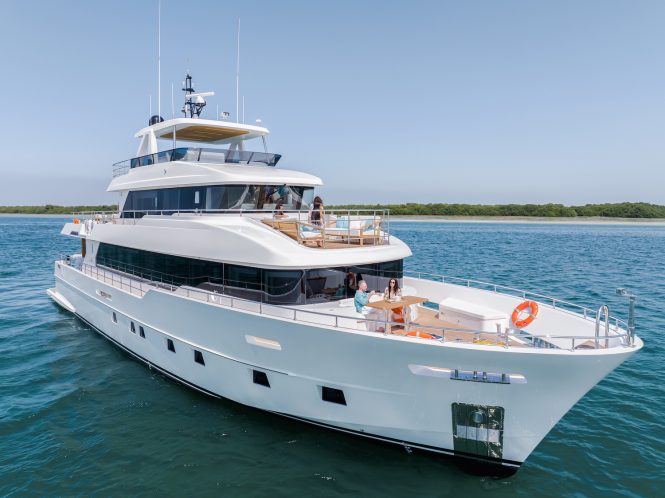
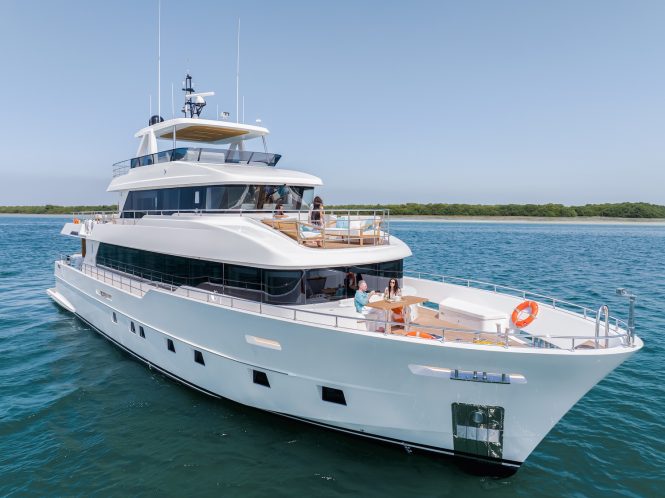
Nomad 101 yacht by Gulf Craft
How important are events like the Singapore Yachting Festival for Gulf Craft, particularly with respect to charter clients and owners in Asia?
Events like the Singapore Yachting Festival are incredibly important for Gulf Craft. Asia represents a key growth market for us, and we are seeing sustained interest from both private owners and charter clients who are increasingly drawn to lifestyle-led yachting experiences.
The show provides a valuable platform to engage with clients, dealers, and prospects. Face-to-face interaction remains essential in this segment, particularly when introducing new models and understanding how expectations are evolving across the region. They also allow us to demonstrate how our yachts are designed with markets like Southeast Asia in mind, from outdoor living and onboard comfort in warmer climates to layouts that support flexible, multi-day cruising.
Equally important is our long-term commitment to the region. Today, we are supported by an expanding network of partners across Singapore, Malaysia, Thailand and Vietnam, ensuring consistent, local expertise for both owners and charter operators. This presence continues to grow, with additional markets to be announced very soon, further strengthening our ability to support clients throughout the full lifecycle, from acquisition to after-sales, and reinforcing confidence in the region.
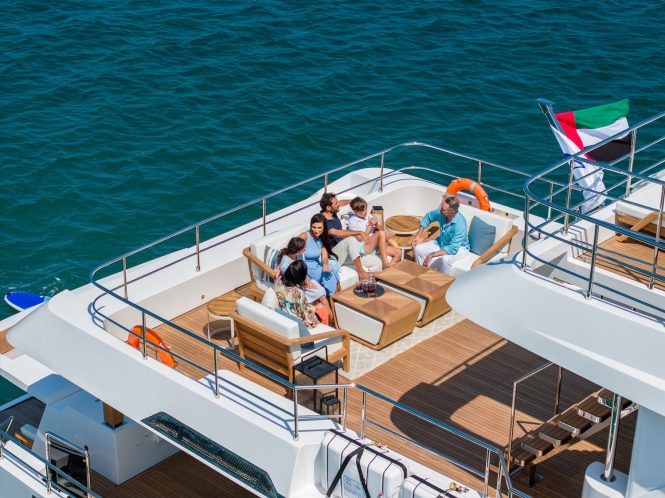
Upper Deck Aft Seating
Tell us about the Nomad yachts on display at this year’s festival and describe the Nomad owner in one sentence. Who are they?
At this year’s festival, we are showcasing the Nomad 101, presented by our local dealer in Singapore, MAG Subsea. The tri-deck superyacht is designed for extended time on the water, with a strong emphasis on onboard comfort, generous outdoor spaces and a seamless indoor-outdoor connection suited to warmer climates.
The flybridge is a key feature, acting as a central social space with ample room for dining, relaxation, and entertaining, supported by panoramic views and flexible configurations. Across the yacht, the focus is on creating an environment that feels open, functional and comfortable over an extended time on board, a true home away from home for owners and their guests.
In one sentence: the Nomad owner is someone who values time on the water, shared experiences and the freedom to explore at their own pace, with comfort and ease built into every aspect of the journey.
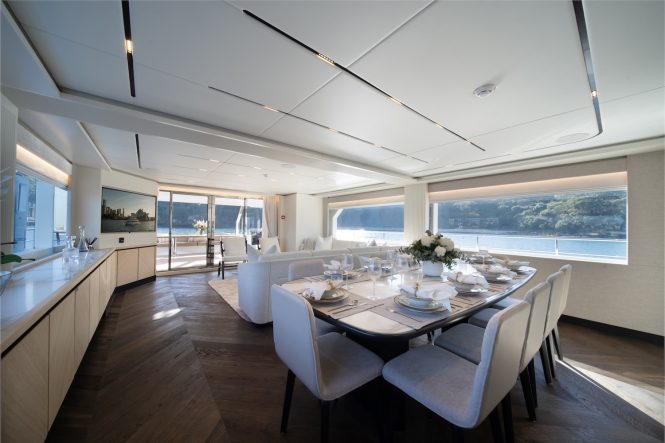
Dining Saloon
How do you see the Nomad series fitting into the charter market, and are more owners building yachts with charter use in mind?
The Nomad series fits naturally into the charter market, particularly in regions like Asia, where demand is shifting towards more relaxed, experience-led itineraries.
Its design supports this through well-balanced outdoor and indoor spaces, multiple social areas, and a layout that encourages a close connection to the surroundings. The flybridge, in particular, becomes a central gathering point, while the overall configuration works well for families and mixed groups, which remain a core part of the charter segment.
Operationally, the yachts are designed with efficient crew flow, allowing for a high level of service without compromising guest privacy. This is an important factor in ensuring a consistent onboard experience.
We are also seeing a clear shift in owner mindset. More clients are considering charter from the outset, whether to offset operational costs or to ensure the yacht remains active throughout the year. As a result, there is a growing demand for yachts that can accommodate both private use and charter without compromise.
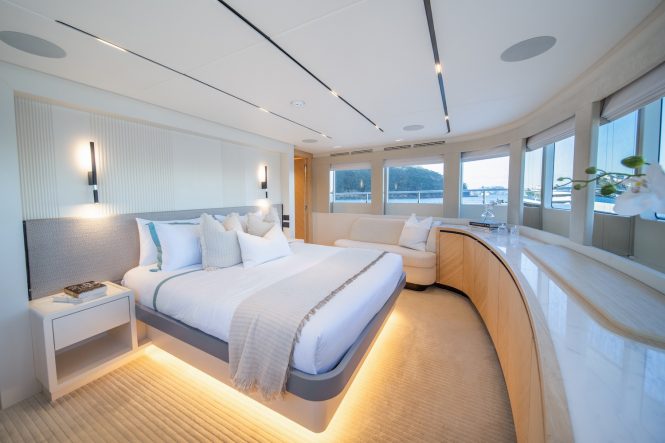
Owner stateroom
What excites you most when you step onboard a new yacht for the first time?
Being closely involved throughout the entire build process and spending a significant amount of time on the production floor means I have seen the yacht evolve from initial concept through to final execution. A yacht is the result of months and sometimes years of design, engineering and collaboration, so stepping on board for the first time is about understanding whether that vision has translated into a space that works as intended.
It is not just about aesthetics, but about how the layout flows, how the spaces are used, and whether it delivers the experience the owner expects. Ultimately, it is that moment where the work of the team comes together in a very tangible way.
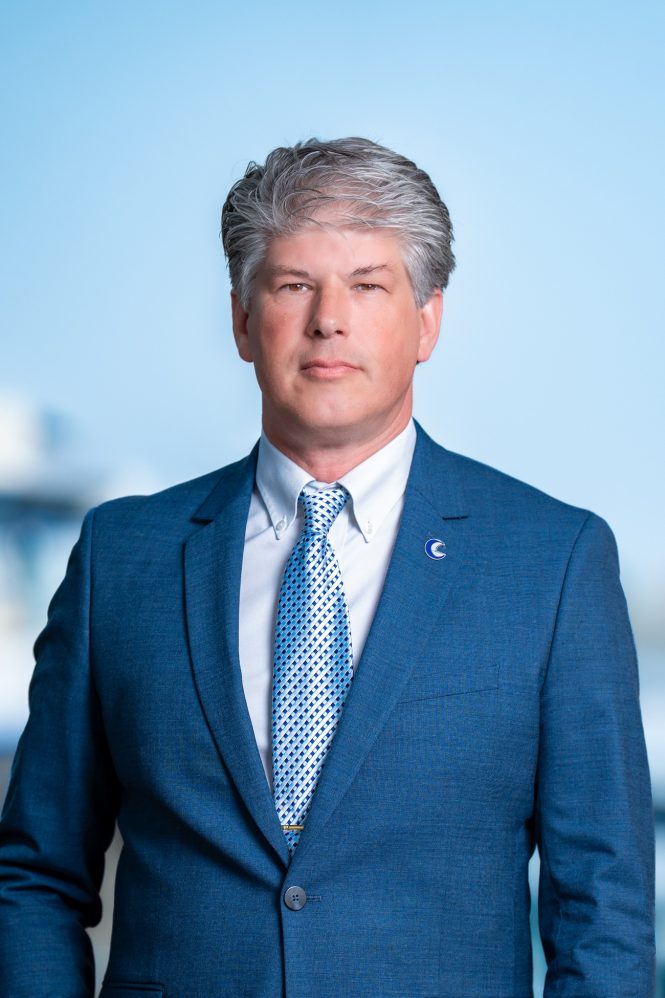
Erwin Bamps, CEO of Gulf Craft
Do you see sustainability as the key driver of future innovation in yachting, and what steps is Gulf Craft taking beyond the usual talking points?
Sustainability is an important driver of innovation, but it needs to be approached in a way that reflects how yachts are actually built and used in practice.
At Gulf Craft, we apply efficient composite manufacturing, reduced-waste lamination, and vacuum infusion techniques throughout our builds. Our production processes are designed to be resource-conscious, from recycling material off-cuts and optimising energy use, to implementing minimal-overspray paint systems and engineering hulls for extended service life. Many of our vessels are also developed with fuel-efficient hull profiles and systems intended to reduce emissions and operational waste over time.
In parallel, we are developing a next-generation onboard energy management roadmap. This will allow us to integrate propulsion support, shore-power conversion, battery systems, and onboard power management into one coordinated system. The objective is to reduce fuel consumption while enabling quieter, cleaner, and more responsible cruising, alongside improved onboard comfort.
For us, sustainability is not a single feature, but a continuous process of improving efficiency and reducing impact in a way that remains relevant to owners.
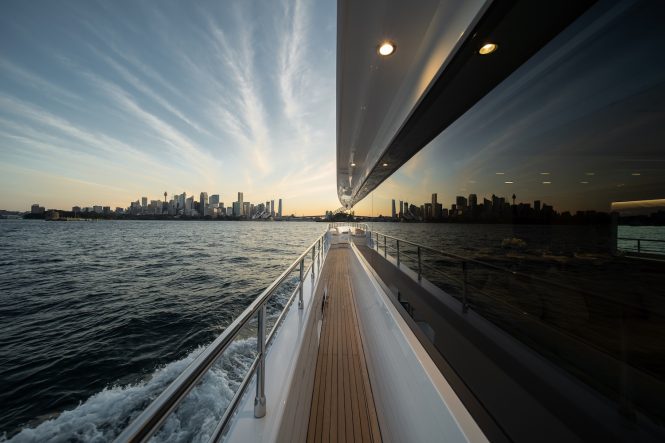
Nomad 101 Gunnel
Do you see Southeast Asia as an emerging charter hotspot, and what’s driving that growth?
Yes, very much so. Southeast Asia is clearly emerging as a key charter destination, driven by its natural diversity, year-round cruising appeal and the continued development of infrastructure to support yachting.
With over 60,000 kilometres of coastline, thousands of islands, and consistently favourable climates, the region supports year-round recreational boating. Its strategic position between the Pacific and Indian Oceans, combined with expanding marina and service infrastructure, makes it an increasingly important waypoint within global yachting. This isn’t a seasonal Med-style market; it’s a 365-day usable, which is critical for charter economics.
What makes the region particularly compelling is the variety it offers within relatively short cruising distances, from remote islands and secluded anchorages to vibrant coastal cities. This allows for highly flexible itineraries, which is exactly what today’s charter guests are looking for, particularly families and groups who want both exploration and comfort within a single journey.
We are also seeing increased demand from both regional and international clients, alongside improvements in marina networks and service capabilities. Having operated in the region for many years, we have seen this progression firsthand.
At the same time, expectations are evolving. There is a stronger focus on privacy, flexibility and experience-led travel, which aligns closely with how our yachts are being designed and used today.