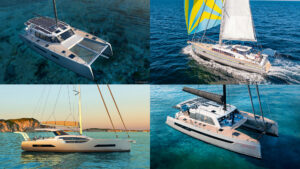
Once a rarity the aluminium bluewater cruiser is now something being embraced by a great many builders. Here’s four adventure yachts being launched this year
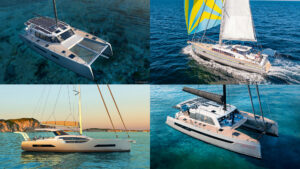
The modern cruising landscape is undergoing a metallic makeover as shipyards double down on aluminium new builds. No longer reserved for utilitarian workboats, the latest wave of adventure yachts combines go-anywhere ruggedness with a level of interior refinement that challenges the traditional luxury market.
From French centreboarders designed to beach on remote shorelines to high-performance catamarans built for 200-mile days, these new launches prove that you don’t have to sacrifice elegance to achieve ultimate autonomy.
Here is a closer look at the three standout aluminum designs leading the charge into the world’s most demanding waters.
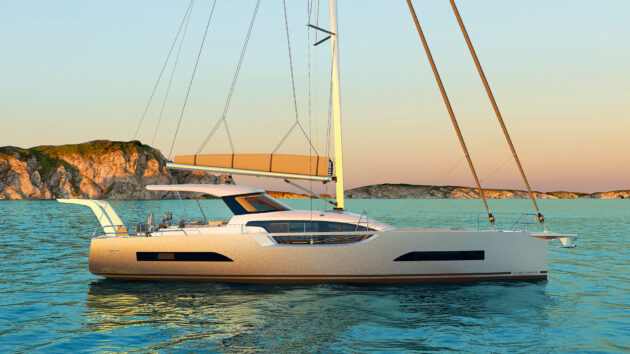
Allures Horizon 47
Allures has been building aluminium centreboarders for bluewater cruising for over 20 years. The niche of this Normandy shipyard lies in combining aluminium hulls with composite decks, offering a robust structure with a lighter deck and curved deckhouse. With this new Horizon model, Allures is striving for more elegance and desirability.
Marketing manager Jérôme Guillou says Allures learned a lot with the 51.9, and improved it as much as possible, so now wanted something different, “a new proposal”. The Horizon is still a robust design for bluewater cruising, but is conceived to offer some extra elegance, including a large open interior from which to see the world.
Long-term design partners Berret Racoupeau came up with some smart ideas. The side-deck is the same single-level as the cockpit, all protected by a 40cm-high bulwark. Yet where this high freeboard could potentially reduce visibility from the deck saloon, cutaways incorporated in the bulwarks help facilitate and emphasise the extensive views available from the main living space, whether standing or seated.
Covered cockpits are, sensibly, an emerging theme on production cruising yachts, and here offers a fully protected watchkeeping position. Meanwhile, the beamy, scooped transom area provides that luxurious terrace-on-the-sea effect, with a large swim platform below the davits, which will be welcomed in warm, calm waters.
Guillou describes the design as “a revenge of the monohull on the cats”.
The main layout difference it lacks over the larger 51.9 is a full-beam aft owner’s cabin. Instead, the forward cabin is the 47’s master and can be chosen with or without an en suite heads and separate shower. A central island structure provides some bracing to the galley, while the aft port cabin can be a technical room or a third sleeping cabin.
The first five hulls have been sold. Hull construction began last year in Condé-en-Normandie, with fit-out at Allures’ Cherbourg yard. The structure includes 16 aluminium frames spaced every 70-90cm, a keel casing for the centreboard to retract into, and a grounding plate to allow the 47 to beach safely. Tankage includes 650lt of diesel and 500lt water.
Allures is planning to launch the first hull this autumn and present it at the Paris and Düsseldorf boat shows over the winter.
Allures Horizon 47 specifications
Hull Length: 14.25m 46ft 9in
Beam: 4.70m 15ft 5in
Draught: 1.20-3.10m 3ft 11in-10ft 2in
Displacement: 15,000kg 33,069lb
Ballast: 4,950kg 10,093lb
Price: €827,118 ex VAT
Contact: allures.com
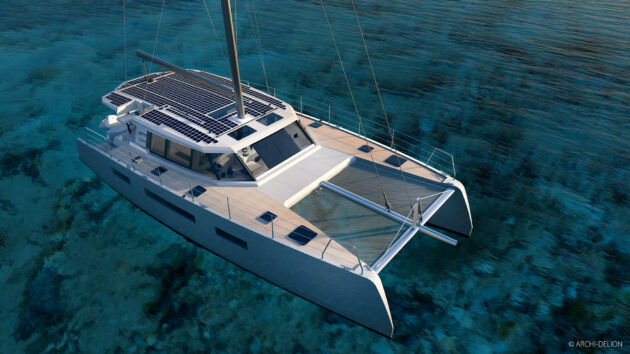
Nahoa M
Two years ago we introduced the Nahoa 55 in these pages, an aluminium explorer design conceived by and for a highly experienced cruising family – and popular YouTubers Ben Brehmer and Ashley Stobbart of Sailing Nahoa. A powerful-looking catamaran with a high bridgedeck, prime features include plenty of protection, and the ability to handle lines from a forward cockpit. The project began as a one-off build, with a focus on a short-handed cruising yacht that can offer sustained high average speeds, and has now been developed into a production brand.
That decision led to Brehmer and Stobbart employing Pierre Delion, an experienced naval architect in both production (Explocat, Django, Mojito) and offshore commercial vessels, to create a production-friendly design. Delion and his Nantes-based team have progressed the design, also shifting the proportions slightly. As Brehmer explains, it’s now around 57ft overall and 55ft on the waterline, with “roughly the interior volume of a typical 50-footer.
“The aim is sustained high average passage speeds while keeping the platform light, efficient and manageable for a short-handed crew.”
The forward cockpit and protection philosophy remain central. “The design focus is on control, repeatability and manageability… recognising that real-world offshore sailing often involves layered swell systems, gusty squalls and long passages where crew fatigue becomes a critical factor,” adds Brehmer.
The bimini space helps provide over 5kW of solar panel capacity. And while the performance spec points to the ability to maintain double figures under sail and clock 200-mile days, it is still powered by twin 80hp diesels fed by generous tanks (1,800lt). Construction of hull No1, for Sailing Nahoa, is scheduled to start in the coming months at Circa Marine in New Zealand. Fully welded marine-grade aluminium is selected for impact resistance and global repairability. The initial production run is limited to four hulls, and pricing is expected to “sit competitively within the premium aluminium expedition sector”.
Nahoa M specifications
LOA: 17.3m 56ft 9in
LWL: 16.8m 55ft 1in
Draught: 1.55m 5ft 1in
Displacement: circa 20t
Contact: nahoayachts.com
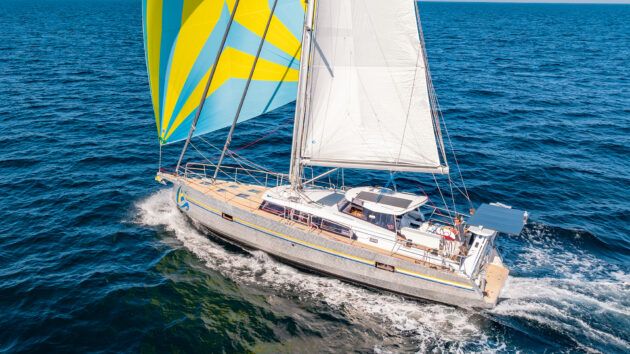
Ovni 490
Alubat’s Ovni marque is famed for its aluminium centreboard cruisers. The 490 is its latest pilothouse model in the current Mortain/Mavrikios-designed range, which features broad forward sections and voluminous interiors.
We featured it in these pages a year ago, just before the first boat launched last autumn, an electric-powered example and the fourth Ovni for this owner. It should be noted that twin shaftdrive 50hp Volvo diesels come as standard (along with 1,000lt fuel tanks).
A bold design marked by its reverse stem and two-tiered coachroof structure, the 490 is already proving popular with seven ordered. Again it can take to the ground, and stands out for its purposeful look, including the bare aluminium hull and big arch framing the aft helms.
The appeal of this three-cabin model centres on the protection it offers, both from its long and partially covered cockpit and its full pilothouse, from where two or three people can sit in shelter.
Further forward, there’s a raised saloon offering clear views when seated. Practicalities continue through the interior, including a passageway utility room-style space for a wet-weather locker, washing machine and extra refrigeration. There’s also a technical locker that can be accessed from the cockpit, while the full-height sail locker can also be reached via a watertight door in the forward heads compartment.
The second hull launched as we went to press, and the third will be exhibited at the La Rochelle show in September.
Ovni 490 specifications
LOA: 15.95m 52ft 4in
Hull length: 14.90m 48ft 11in
Beam: 4.80m 15ft 9in
Draught: 1.00m-3.10m 3ft 3in-10ft 2in
Displacement (max loaded): 21,000kg 46,300lb
Price: €1,035,000 ex VAT
Contact: alubat.com
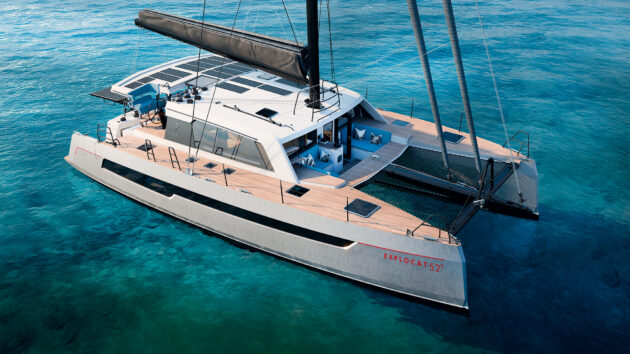
Garcia Explocat 52.2
The Explocat has helped cement Garcia’s reputation for its aluminium exploration range, and the Cherbourg yard still promotes this range as the only small series aluminium catamarans designed for bluewater cruising. Another Pierre Delion design, combined with styling from Franck Darnet, the 52 has proven popular with 16 ordered since its inception six years ago.
Like its sister company Outremer, Garcia continues to advocate the benefits of a bulkhead-mounted swing pedestal, which allows the helmsman to steer with the wind in their hair or from a protected position from beneath the cockpit bimini.
Updates included on this 52.2 centre around this feature, and include the choice of having the winches conventionally located on the coachroof, together with an extended helm seat and optional cockpit galley (pictured), or to locate them in the cockpit so you can steer and handle the sails from a fully protected position to suit short-handed cruising.
Other reworked features include larger hull windows and improved cockpit layout and transom access.
 If you enjoyed this….
Yachting World is the world’s leading magazine for bluewater cruisers and offshore sailors. Every month we have inspirational adventures and practical features to help you realise your sailing dreams.Build your knowledge with a subscription delivered to your door. See our latest offers and save at least 30% off the cover price.
Note: We may earn a commission when you buy through links on our site, at no extra cost to you. This doesn’t affect our editorial independence.
The post The new rugged aluminium explorer yachts redefining adventure appeared first on Yachting World.