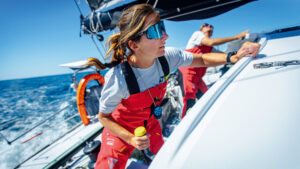
Pam Lee has competed in high level double-handed racing for four seasons, from Figaro to Class 40s. Here she shares winning tips for sailing two-up with Andy Rice
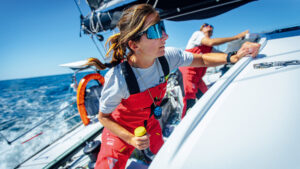
The team dynamic in double-handed sailing is very different compared with fully crewed boats, says Pam Lee.
“In your classic IRC team you really need to have a clear hierarchy,” she explains. “You have the driver, the navigator and the tactician making the big decisions at the back of the boat, and further forward the trimmers and the pit and the bow who are not necessarily integrated into the decision-making process.
“With just two of you in double-handed, there’s still going to be a skipper who remains responsible overall for the boat and crew. But what I’ve found over the last four years – and put into action this past season sailing with Jay [Thompson] – is that everything should be a discussion, that two heads are better than one. We’re having a continual, ongoing discussion about all aspects, whether it’s nav and tactics, or trimming or even the setup of the boat.
“Even though last season’s campaign was built on my sponsorship, my project, I wanted to bring in a person who has a whole range of knowledge and experience, that’s similar but also different from mine. So they’re going to have interesting points of views. They’re going to have other things to contribute and the advantage of having that team-mate is that you can pick their brain and test ideas and tell them your ideas and see what they say.”
Here are Pam’s five tips for getting the best out of the partnership, especially when the going gets tough:
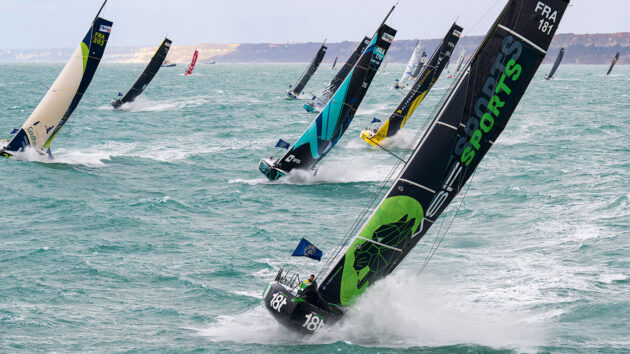
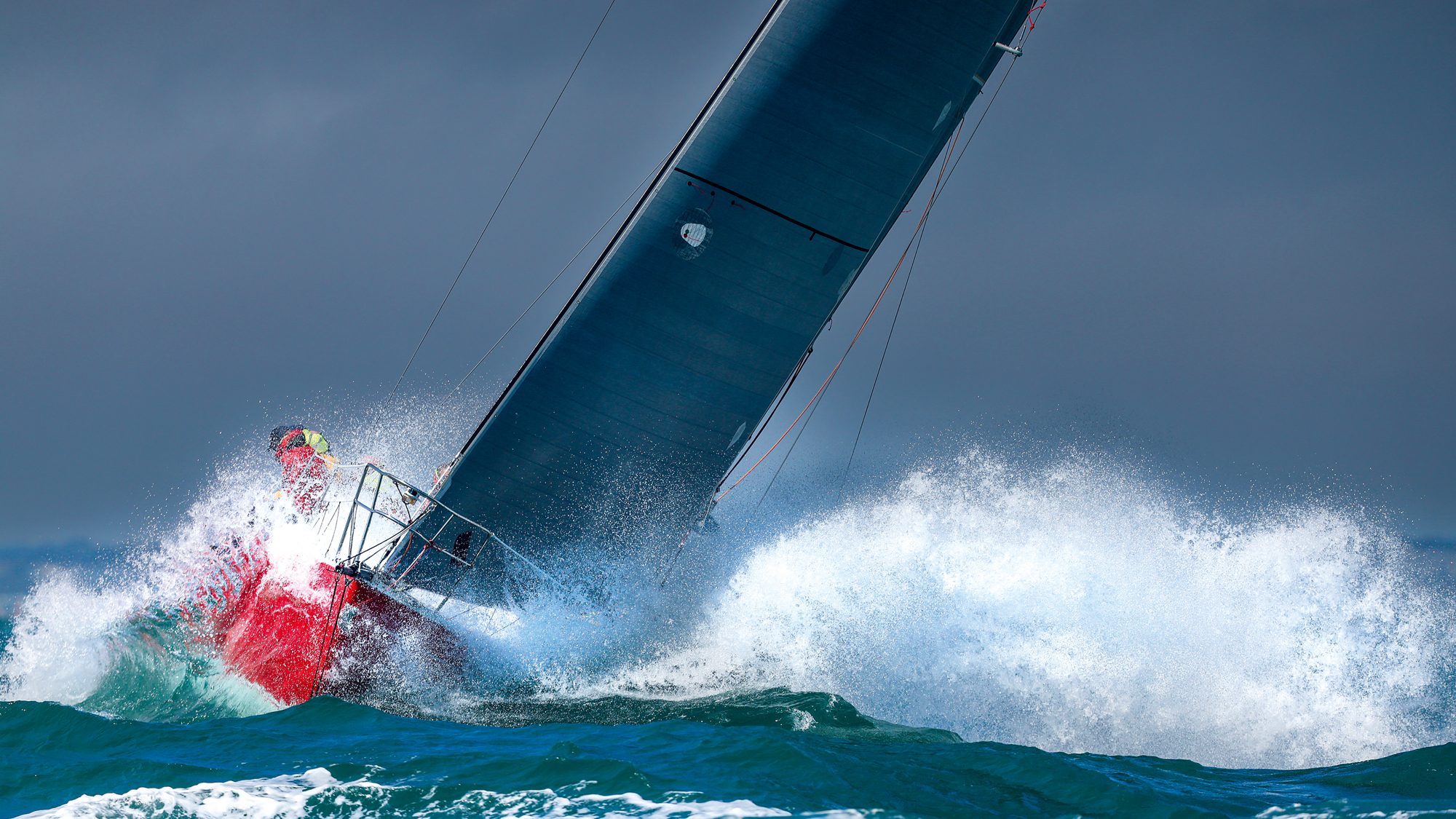
Although there are times when it’s good to hand steer – including race starts – getting really familiar with your autopilot is key. Photo: Jean-Louis Carli/Alea
Anticipate disagreements
It’s good to have some in-depth, honest discussions between the two of you before you set out on the race. How you want to work together on the boat, what the other person feels their strengths and weaknesses are – and what you feel your strengths and weaknesses are.
You’re going to be working in an intense environment where you’re short on sleep and maybe wet and cold, so the more you can work out in advance between you, the better.
Talk about when things go bad before they go bad. Obviously you’re going to debrief things afterwards, but if you’ve laid out your objectives in advance you’ll manage the difficult moments at sea with much less conflict and more of a shared direction.
Don’t be a hero
When you have just two of you on board, there’s very little room for making a mess of things. If things go wrong it can have serious consequences. If something bad happens to you, the other person is completely on their own.
On a fully-crewed boat in the worst-case scenario of a man overboard you’ve got many people to help drop the sails and turn the boat around. That’s not the case when you’re double-handed. You need to really, really think about the other person in all situations.
On an IRC boat in calmer conditions you might think about running up on the foredeck without clipping on. But you can’t afford to cut corners with safety when you’re two-up.
Article continues below…
5 expert tips: How to make the best of crew dynamics
During the build-up to the 2024 America’s Cup, inside the INEOS Britannia team we came up with a set of…
5 Expert Tips: How to run a succesful offshore campaign on a budget
Lawrence Herbert loves his offshore racing but he and the Corazon crew are campaigning their J/133 on a tight budget.…
In light winds when you think you can manage a gybe without waking up your team-mate, don’t do it unless you agreed on the parameters for a solo manoeuvre beforehand. It’s selfish to attempt complex manoeuvres on your own unless you’ve both agreed to ‘take that risk’, in certain conditions; the consequences of mistakes affect you both.
Self-care – staying warm, well fed, and rested – is also not just a personal matter but a duty to your team-mate. If one sailor ‘crashes’ physically or mentally, the entire project is compromised.
Find your default setting
Jay and I have a default setting where we’ll be prepared for anything. Between us, I’d tend to fall into the role of steering and doing most of the cockpit-based jobs while Jay is pretty much working the mast and bow area. Often I’ll go forward and help him set things up on the foredeck and then go back to the cockpit.
We have our specialities, our skills that we like to put to work. Jay is super-happy going up the mast and doing the climbing, while I’m very comfortable in the water, so I’ll do any of the diving to get something off the keel or whatever’s needed. But there’s a lot of overlap in our roles, and when things are less stressful we deliberately switch roles to get as comfortable as possible in each other’s roles.
I always say that on an IRC boat, everybody should do trimming for a day, and go up on the bow for a day, so that everyone understands each other’s roles. That’s what we do in double-handed sailing too, but when the pressure’s on and you need to get things done as quickly, safely and efficiently as possible, that’s when you revert to your default setting.
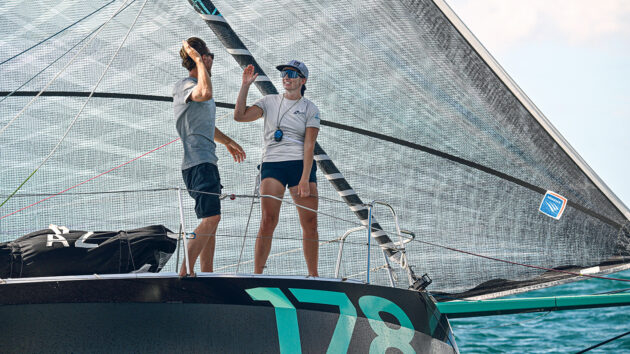
Lee and Thompson celebrate finishing the Transat Café L’Or. Photo: Jean-Louis Carli/Alea
Befriend the pilot
When you’re sailing double-handed, the autopilot is your best friend, it’s like your third crewmember. Through the manoeuvres you don’t have enough hands to steer the boat and pull all the sheets, especially in tough conditions or if something goes wrong, so you need to get to know and trust your autopilot. We spend a lot of time experimenting with it, finding the best settings and marking them down so we can get back to those settings easily.
But we’re also sailors and it’s really fun to drive the boat, and it’s good not to get too reliant on the autopilot. You still need to steer the boat manually to work out whether you need to be surfing down the waves slightly differently, or if you need to trim the sails differently.
I always drive the starts because it’s so close quarters with the other boats. But after 40 minutes of concentrating you’re going to start getting tired, and that’s when you need to start relying on the autopilot.
You’re still adjusting it the way that you trim the sails. You’re tweaking the autopilot settings to changing wind strengths or sea states. Jay and I play with the settings until we get it to the point where it feels right. There’s always that last bit of speed to squeeze out of the boat, whether it’s heel angle, trimming the sails, and so on, and tweaking the autopilot is part of that same process of refinement.
Manage the ‘marriage’
I’ve lost count of how many days Jay and I have spent at sea together over the past year. And on top of that, all the preparation for the project as well as all the training and everything else. One thing I know for sure is that we saw each other more than Jay saw his wife and I saw my boyfriend! So of course it’s going to be intense.
Over time there’s a risk the other person’s habits can go from being amusing to irritating, but don’t give in to that. Add a pinch of salt to everything, give your team-mates some leeway (and hope they do the same for you).
Sailing’s not a sport where we’re going to be comfortable all the time; we’re going to be cold and wet and short on sleep, so try to show some generosity and compassion when you’re communicating with your team-mate.
When they do things that annoy you, let it slide, and remember you’re probably doing things that annoy them too. Treat them as you would in a relationship, or a good friend or family. You love them, so you let things slide. This is your team-mate. They share the same dreams and goals as you. They’ve committed a lot of time to do this with you and you’ve committed a lot of time with them, so show each other that mutual respect you both deserve.
Our 5 expert tips series is brought to you in association with Musto.
 If you enjoyed this….
Yachting World is the world’s leading magazine for bluewater cruisers and offshore sailors. Every month we have inspirational adventures and practical features to help you realise your sailing dreams.Build your knowledge with a subscription delivered to your door. See our latest offers and save at least 30% off the cover price.
Note: We may earn a commission when you buy through links on our site, at no extra cost to you. This doesn’t affect our editorial independence.
The post How to win at double handed sailing: Expert tips appeared first on Yachting World.